Pediatric Physical Therapy in Geneva
At CARE Maisonneuve in Geneva, we support your child’s motor development from the very first months of life, providing care tailored to their needs and placing a strong emphasis on parental involvement.
Why pursue a career in pediatric physical therapy?
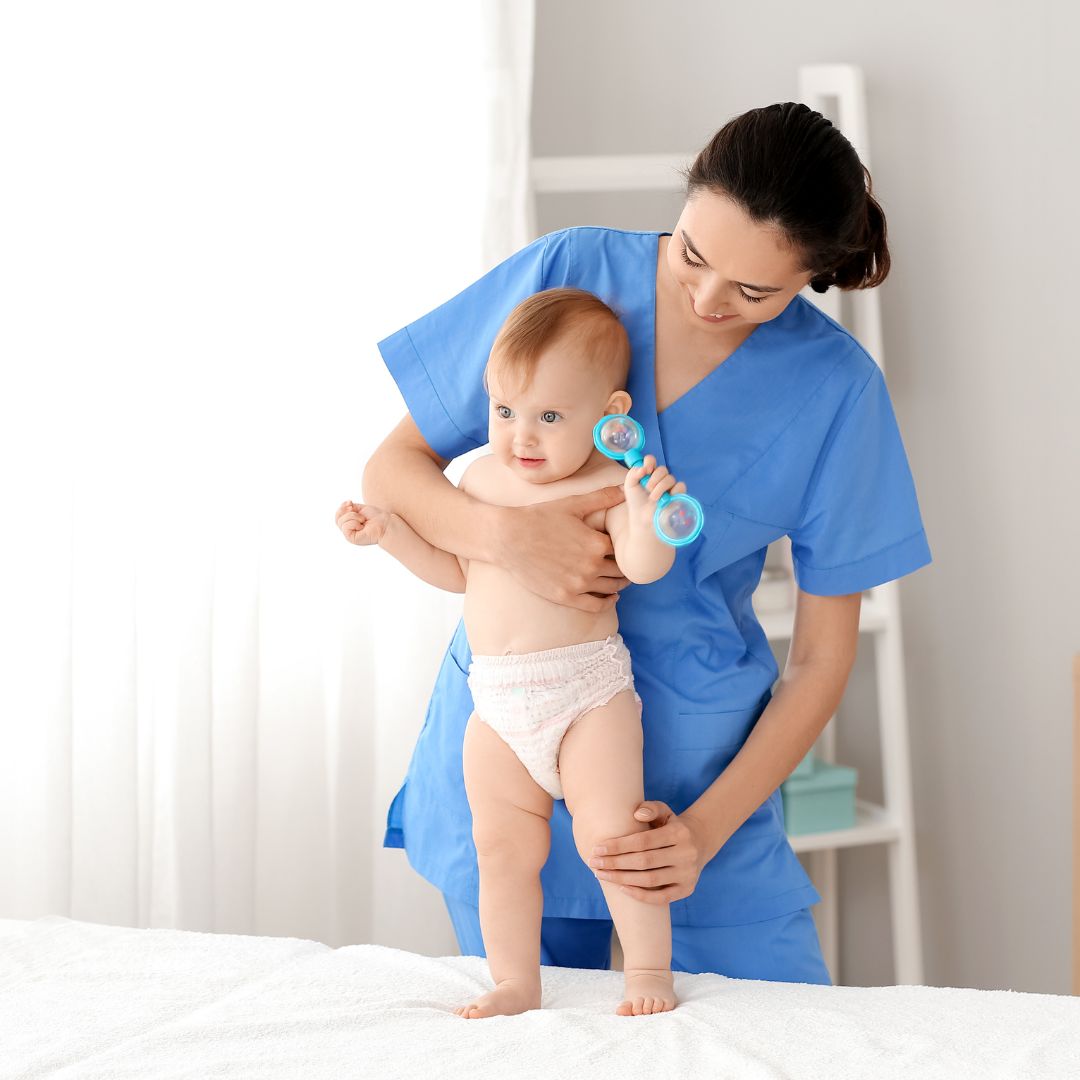
Does your baby always turn his or her head to the same side, seem uncomfortable in certain positions, or have trouble rolling over and moving around? Do you have questions about the position of your child’s feet or how he or she walks?
Pediatric physical therapy helps assess these challenges and provide support when appropriate. Our goal is to help your child explore their range of motion and become more independent, while giving you guidance on how to support them in their daily life.
Every child develops at their own pace. Differences compared to other children in their age group do not necessarily mean that treatment is needed: the evaluation provides an opportunity to assess the situation, in consultation with your pediatrician.
What is neuromotor development?
Neuromotor development refers to the gradual acquisition of motor skills, which is linked to the maturation of the nervous system and the child’s experiences. Holding up their head, grabbing a toy, changing positions, moving around, and eventually walking are all skills that allow children to explore their environment.
We observe how your child moves, balances, and coordinates their movements. This observation helps us understand what facilitates or hinders their development, beyond simply the age at which a milestone is reached.
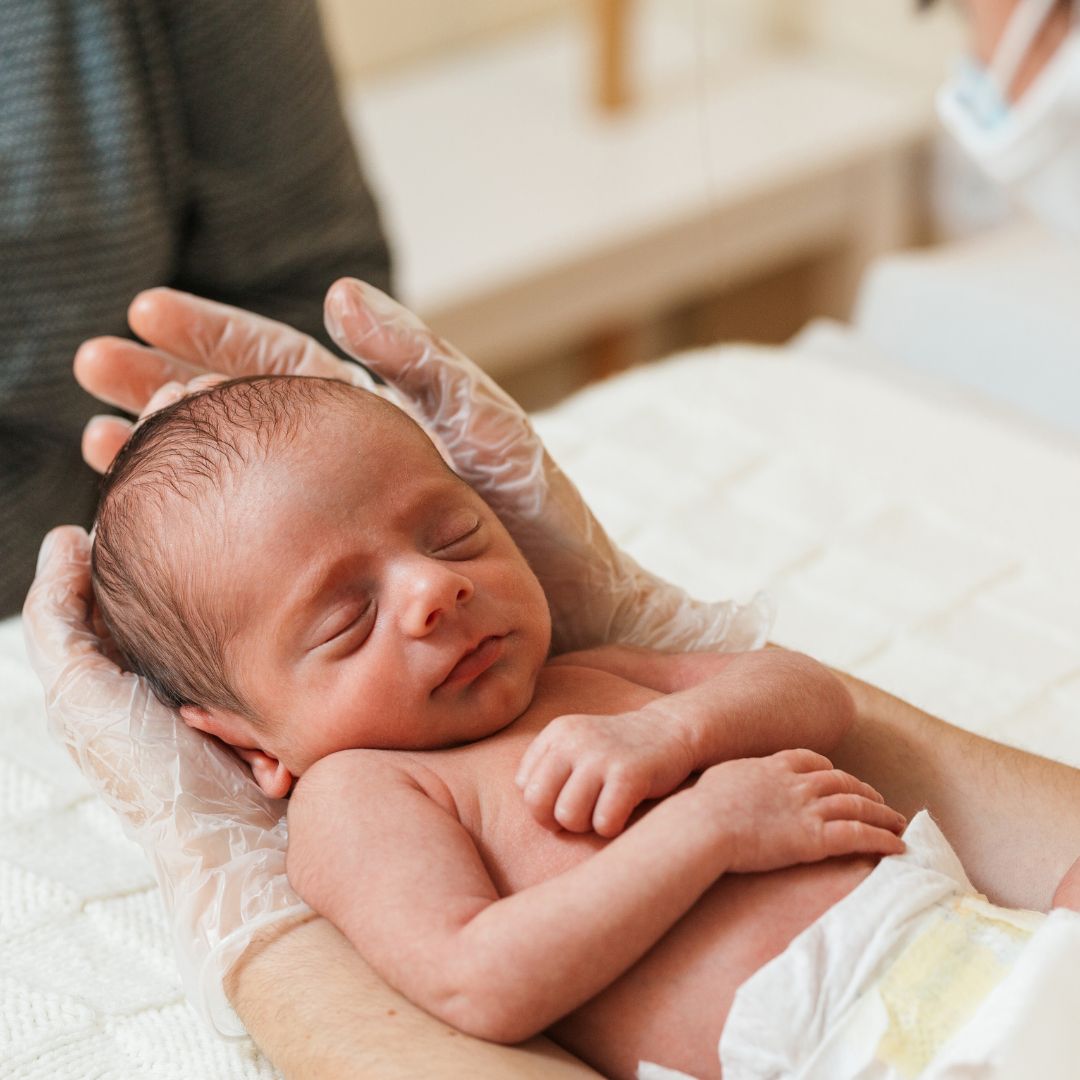
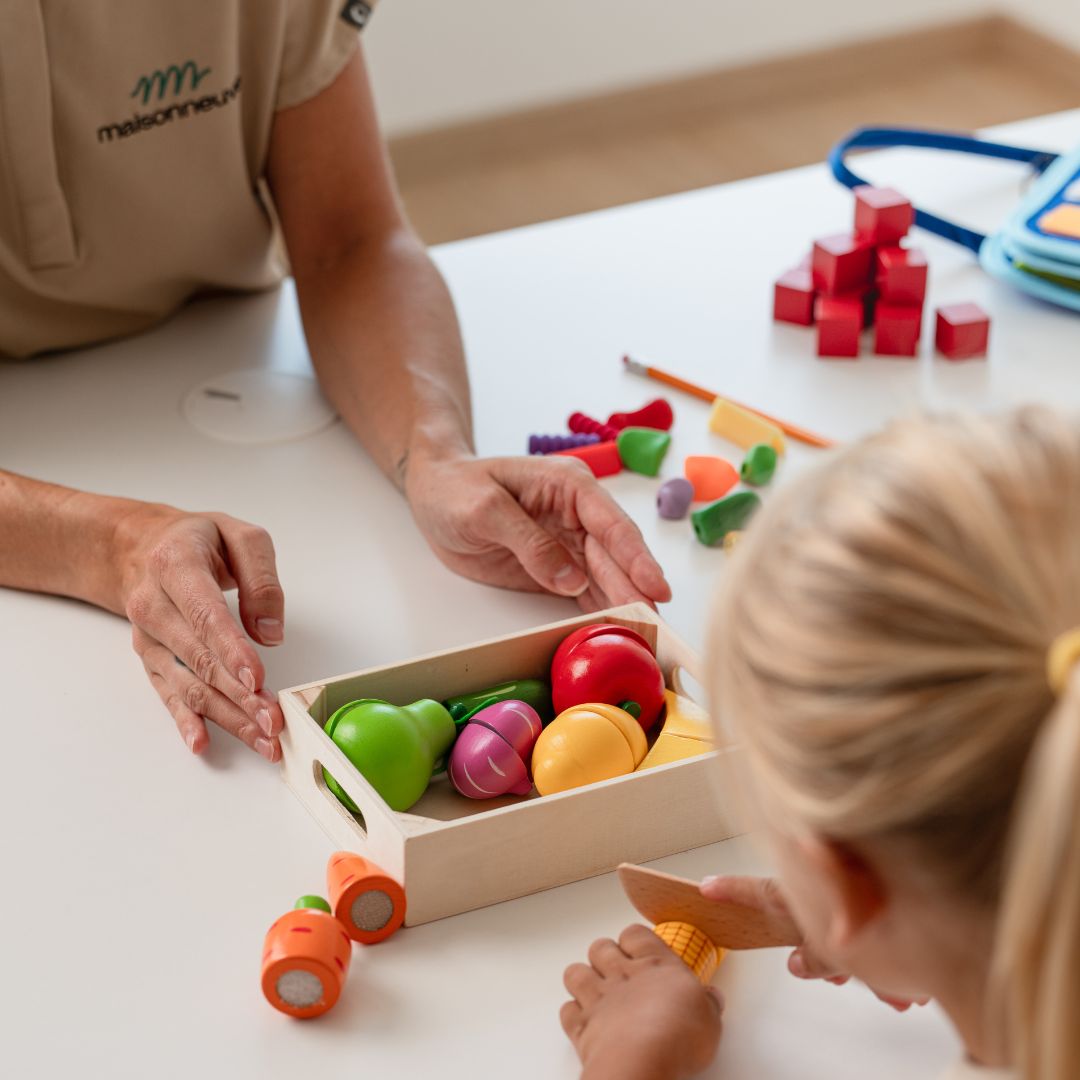
What types of conditions does pediatric physical therapy treat?
The support focuses in particular on:
- Difficulties or delays in motor skill development: rolling over, changing positions, moving around on the floor, or taking the first steps.
- Asymmetries and limitations in an infant’s mobility, such as a persistent preference for turning the head to one side.
- Foot deformities in infants and gait disorders in children, following an assessment of their impact.
If necessary, a second medical opinion can help determine the course of treatment.
What are the potential benefits of pediatric physical therapy for my child's health?
Support for Motor Skills Development
Support your child’s learning based on their current abilities and the challenges identified in the assessment.
Improving Mobility
Help them vary their positions and movements so they can explore their environment more easily.
Developing Balance and Coordination
Offer age-appropriate activities to develop the footing, stability, and coordination needed for movement.
Walking Support
Address walking difficulties as needed, taking into account the patient’s age and orthopedic evaluation.
Progress Toward Greater Independence
To make it easier to perform useful everyday tasks, such as reaching for a toy, standing up, or participating in an activity.
Confidence and Joy in Movement
Use play and your child’s interests to encourage their participation.
Guidelines for Parents
To help you understand your child’s needs and incorporate simple suggestions into playtime and care routines.
The goals and expected progress depend on your child's situation. They are reassessed as the follow-up progresses.
What equipment do you use?
In pediatric physical therapy, equipment is selected based on the child’s age, abilities, and goals. Simple aids may be enough to encourage movement and make the exercises more engaging.
Resources for Ground Activities
A suitable mat allows you to observe and practice foot placement, position changes, and movements.
Toys and objects to explore
Objects to look at, grasp, or reach for can encourage spontaneous movement and participation in children.
Equipment for Support and Balance
Depending on the needs, stable supports or small obstacles can be used to facilitate activities focused on weight shifting, standing up, and walking.
Development Assessment Tools
The assessment may draw on standardized tools, such as AIMS for observing an infant’s motor skills and HINE for the neurological examination of young children, when their use is appropriate. These tools complement clinical observation and help track progress.
For coverage under basic health insurance, a doctor’s prescription is required, subject to applicable conditions. The first session must take place within five weeks of the initial prescription being issued.